
Editor’s Note: LIFTT’s Data & Quality Control Manager, Freda Mook, talks about how LIFTT uses the data it collects to inform our engagement with our consumers and to make sure we are doing our best to provide them with the programs and services that they want and need in order to become and remain independent.
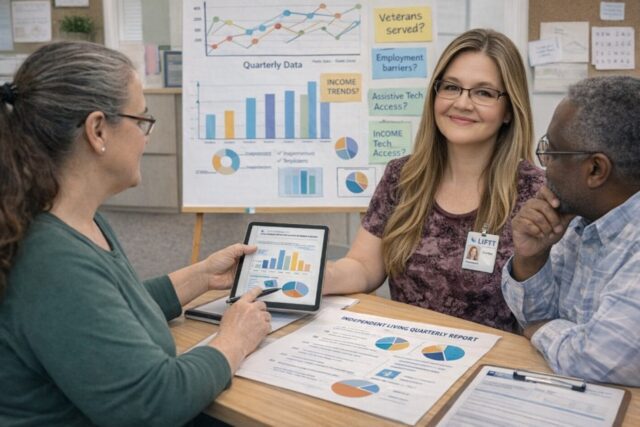
At LIFTT, data is more than a collection of numbers on a report. It is a living story about people, communities, and the barriers they navigate every day. As one of more than 400 Centers for Independent Living across the United States, we rely on data to guide decisions, evaluate our work, and ensure our services remain responsive, intentional, and equitable.
For many organizations, data begins and ends with statistics. At LIFTT, that is where the story starts.
When we look beyond totals and percentages, data reveals patterns of need, access, and opportunity. It shows us where people are reaching out for support, which services are in highest demand, and how experiences can differ across geography, disability type, or life circumstance. It helps us see not only what is happening, but where gaps exist and where new challenges may be emerging.
But numbers alone never tell the whole story.
What data cannot explain on its own is why those patterns exist. That understanding comes from the people behind the data: their lived experiences, their goals, and the systems they are navigating. When data is paired with human insight, it becomes a powerful tool for learning, reflection, and action.
In my role as Data Manager at LIFTT, I review service outcomes and participation data every day. As I analyze reports on program engagement, goal attainment, and service utilization, patterns begin to emerge. With those patterns come questions that matter.
Why were only eight veterans served during this reporting period? Why is “not employed, not seeking” the most common employment status reported? Out of 240 individuals served, only 15 reported being employed full-time. These numbers do not represent failure. They represent opportunity. They invite us to ask whether employment initiatives are reaching the right people, and whether barriers such as transportation access, workplace accommodations, health limitations, or benefit-related concerns are influencing employment decisions.
Income data tells another important chapter of the story. A significant number of individuals reported annual incomes between $0 and $5,000. This reinforces what we see every day in our work: economic insecurity remains a major barrier to independence. These insights strengthen our commitment to benefits counseling, resource navigation, and advocacy efforts that support greater stability and choice.
Sometimes data surprises us. During this reporting period, only three individuals sought assistance with Assistive Technology services. At first glance, that number raises concern. But data encourages curiosity, not assumptions. It prompts us to ask whether community partners are meeting this need effectively, or whether additional outreach and education may be necessary. Understanding the reason behind the number is what allows us to respond thoughtfully.
At LIFTT, data is not a compliance requirement or an administrative task. It is a tool for accountability, learning, and growth. When combined with direct consumer feedback and lived experience, data helps us adapt services, improve outcomes, and plan intentionally for the future.
Most importantly, data reminds us why our work matters. Every number represents a person. Every trend reflects a lived reality. And every insight brings us one step closer to building systems that truly support independence, dignity, and opportunity.
When we listen carefully to what the data is telling us and honor the people behind it, we create space for meaningful, lasting change.
If you have questions about how data informs LIFTT’s programs and services, or if you would like to learn more about our approach to data quality and impact, please feel free to contact LIFTT’s data and quality control manager, Freda Mook, at (406) 294-5182 or fredam@liftt.org
About Living Independently for Today & Tomorrow (LIFTT): LIFTT is a Montana 501(c)3 corporation organized as a Center for Independent Living (CIL). With team members based in Billings and Glendive, LIFTT provides aging and disabled members of the community with programs and services that help empower them to break down the physical, bureaucratic, and cultural barriers that prevent them from being fully independent participants in their lives and communities throughout 18 counties in southeastern and south-central Montana: Big Horn, Carbon, Carter, Custer, Dawson, Fallon, Garfield, Golden Valley, McCone, Musselshell, Powder River, Prairie, Richland, Rosebud, Stillwater, Treasure, Wibaux, and Yellowstone. For more information, please visit liftt.org or download our mobile app for your Apple device.
Our Vision: Empowering aging and disabled individuals to LIFTT themselves above the barriers of life.
Our Mission: Living Independently for Today and Tomorrow – LIFTT’s mission is to empower aging and disabled individuals to live independently through education, support, and opportunities.