Wednesday Wisdom

On the job training

Years ago, having been supplied with a plethora of information and resources to tackle the particular problem they were seeking assistance with, a LIFTT consumer told their IL specialist, “You guys at LIFTT are like a human Google, you know everything.” Well, we don’t know everything, but we are always learning. LIFTT team members across all our departments are constantly attending training and continuing education events, with an eye toward bringing back to the agency information that will empower and support the consumers we serve. Here, Nutritional Health Coach Eileen Rodrigiuz and Independent Living Specialist Erin Culp share about the trainings they have or will soon be attending


Eileen:

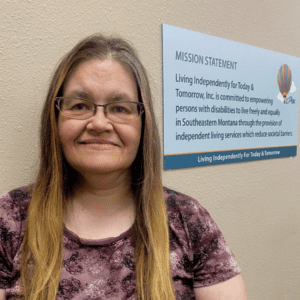
LIFTT Nutritional Health Coach Eileen Rodriguez

As a lifelong learner, I find it exciting to attend training sessions that provide additional tools and resources to better support people navigating health challenges such as cognitive decline.

 
This spring, I have the opportunity to attend a workshop in White Sulphur Springs hosted by Kyla Rock, the Alzheimer’s and Dementia Program Manager in Helena. The focus on brain health, including hands-on experience with dual-task activities offered at the Senior Center, will give me ideas to use in the classes offered at LIFTT.
 
 
Throughout the year, I have participated in the Nutrition & Physical Activity work group, which collaborates on ways to fulfill Montana’s CDC Building Our Largest Dementia (BOLD) grant. Meeting in person in White Sulphur will allow us to have more time to share ideas and better align our efforts to serve our communities.
 
 
The growing interest in Tai Chi classes at LIFTT encourages me to continue expanding my skills as an instructor. Attending Dr. Lam’s Tai Chi for Diabetes training in May will be a nice addition as we prepare for our next Diabetes Prevention class, which starts on June 4.
 
These continued learning opportunities help ensure that the programs we offer are thoughtful, effective, and truly responsive to the needs of the people we serve.
Through ongoing education and collaboration, we can continue to grow and provide classes that support health, independence, and quality of life.


Erin:

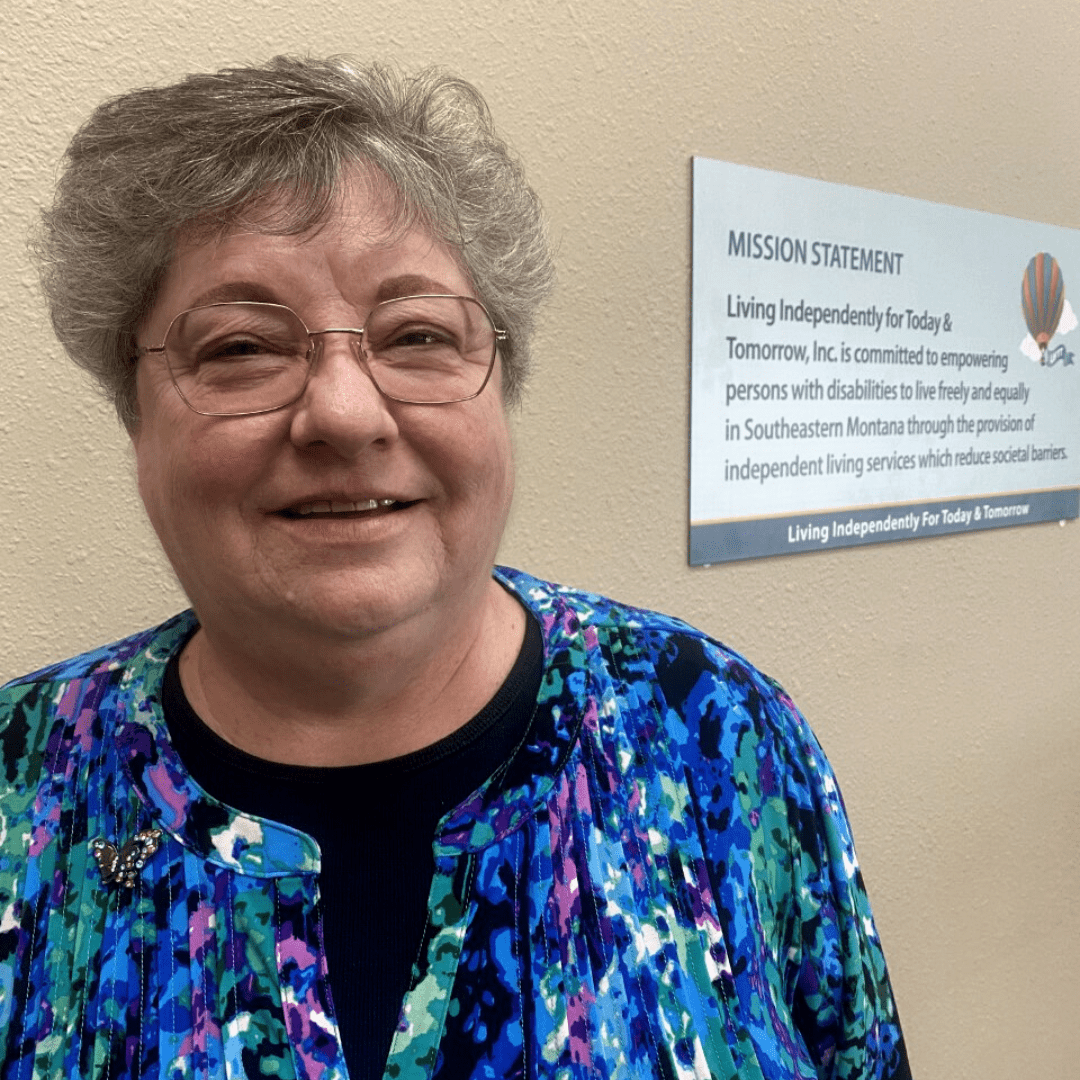
LIFTT IL Specialist Erin Culp

LIFTT IL Specialist Erin Culp

Working in a place that really values learning and growth makes a big difference. The more I learn, the better I can show up for the people we serve, and LIFTT has given me some great opportunities to keep building my skills.

In May, I’ll attend the Staying Active and Independent for Life Leaders’ training, where I’ll learn to lead strength and balance classes. I’m looking forward to helping people feel more confident in their independence and reduce their risk (and fear) of falling. I’ll also be attending Diabetes Prevention Program training. Once I complete that, I’ll be able to support individuals who are prediabetic by helping them make realistic, lasting lifestyle changes to lower their risk of developing diabetes.

I really appreciate that LIFTT supports ongoing learning like this. It’s helped me grow professionally and given me more tools to make a real difference in the lives of the people I work with. I started as an Independent Living Specialist, and after the upcoming training, I will be a new Health & Wellness Coach!


About Living Independently for Today & Tomorrow (LIFTT): LIFTT is a Montana 501(c)3 corporation organized as a Center for Independent Living (CIL). With team members based in Billings and Glendive, LIFTT provides aging and disabled members of the community with programs and services that help empower them to break down the physical, bureaucratic, and cultural barriers that prevent them from being fully independent participants in their lives and communities throughout 18 counties in southeastern and south-central Montana: Big Horn, Carbon, Carter, Custer, Dawson, Fallon, Garfield, Golden Valley, McCone, Musselshell, Powder River, Prairie, Richland, Rosebud, Stillwater, Treasure, Wibaux, and Yellowstone. For more information, please visit liftt.org or download our mobile app for your Apple device.

Our Vision: Empowering aging and disabled individuals to LIFTT themselves above the barriers of life.

Our Mission: Living Independently for Today and Tomorrow – LIFTT’s mission is to empower aging and disabled individuals to live independently through education, support, and opportunities.
You can donate to LIFTT by clicking here.

A Trio of Reflections on Working at LIFTT

A Trio of Reflections on Working at LIFTT

Editor’s Note: As 2025 comes to a close, Three LIFTT Team Members, Lanette Brown, Pamela Ramirez, and Eileen Rodriguez, each offer a reflection on their work with LIFTT. 

Lanette’s Reflection: “A smile can make anyone’s day better.” 

LIFTT SDPAS Program Senior Expert Advisor and Trainer Lanette Brown.

LIFTT SDPAS Program Senior Expert Advisor and Trainer Lanette Brown.

I’m writing to wish you happy holidays and tell you that it has been a true pleasure working with the Self-Direct Personal Care Assistance Program—first as a manager, supervisor, and facilitator, and now as the Senior Expert Advisor and Trainer. This program empowers consumers to live in their own homes, apartments, or with family members, supported by caregivers of their choosing. It offers not only essential assistance but also a sense of independence and dignity.

Over the past 17 years, I’ve had the privilege of supporting Independent Living Specialists and providing guidance to consumers needing ramps, wheelchairs, walkers, canes, bathroom remodels, nursing home transition support, and help maintaining Medicaid eligibility.

The programs at LIFTT exist to ensure that people with disabilities—whether known or not yet identified—have the tools and support they need to be active, valued members of their communities. When individuals thrive, our entire world becomes a better place.

It has been an honor to help bring a bit more independence into the lives of our consumers and to see the difference it makes.  “A smile can make anyone’s day better.”

If there’s anything I can do for you, please contact me, Lanette, at 406-294-5184 or email me at lanetteb@liftt.org.

Pam’s Reflection: “Every day is a meaningful journey of purpose, growth, and connection.” 


LIFTT Independent Living Program Manager Pamela Ramirez.

LIFTT Billings Independent Living Program Manager Pamela Ramirez.

It is important to me that you know what an impact working with you through LIFTT has had on me, and why this mission inspires me every day.

Working at LIFTT has been more than a job; it has been a meaningful journey of purpose, growth, and connection. Every day, I witness the power of advocacy, independence, and community, not as abstract concepts, but as real outcomes that change people’s lives. Being part of an organization that stands firmly on the belief that individuals with disabilities deserve control, choice, and respect has shaped the way I show up both professionally and personally.

What stands out most to me is the heart of our mission: empowering people to live the lives they choose. At LIFTT, we don’t prescribe solutions; we walk alongside individuals, offering tools, support, and encouragement so they can build their own paths toward independence. I’ve watched consumers gain confidence as they learn new skills, navigate systems, and discover options they didn’t know they had. Moments like these remind me why this work matters.

My time at LIFTT has also shown me the importance of compassion paired with action. Whether it’s helping someone understand a form, connecting them to resources, or simply listening during a difficult moment, each interaction reinforces that small efforts can create huge ripples. I am proud to contribute to a mission that uplifts voices, honors experiences, and removes barriers one person, one step, one success story at a time.

Working at LIFTT has been an honor, and its mission continues to inspire me daily. It has taught me that true independence isn’t just about services, it’s about dignity, choice, and possibility. And being part of that transformation is something I will always be grateful for.

Should you need any assistance, please do not hesitate to contact me at (406) 294-5189 or pamelar@liftt.org.

Eileen’s Reflection: Buliding a Brain Healthy Community

LIFTT Nutritional Health Coach Eileen Rodriguez

LIFTT Nutritional Health Coach Eileen Rodriguez

For several years, I’ve dreamed of starting a Brain Healthy community — a place where people not only learn what supports cognitive wellness but also truly experience what it’s like to live it. Throughout that time, I kept a journal filled with ideas about how I might bring that vision to life. When I started working at LIFTT, I tucked the journal away, not knowing when, or even if, those dreams might become a reality. It wasn’t until a few months ago, as I flipped through its pages, that I realized many of those plans I once hoped for have now become possible at LIFTT.

My vision included teaching Brain Health Classes that offer hope to people who have been told there is nothing they can do to prevent memory loss. I wanted to teach the key lifestyle components needed to protect cognitive health. At LIFTT, not only have more people attended these classes than I imagined, but they bring their friends, saying, “You need to hear this too.” I am energized by the conversations we share, stories of small changes people are making, and the meaningful benefits they notice to
their daily lives.

In my journal, I wrote about offering Lunch and Learn classes to help people tackle the challenge of implementing a healthy diet in their busy lives. Through LIFTT’s partnership with Erin Gregory from MSU Extension Service, that dream has come to life. Erin has created classes that give people practical skills to prepare simple, healthy meals. When participants share that their thinking feels clearer and their memory more reliable because of dietary changes, I know the impact I once imagined is becoming real.

Exercise was another essential part of my vision, since it is one of the most powerful tools in maintaining and improving brain health. Being able to offer strength training classes called Staying Active and Independent for Life (SAIL) has been such a gift. I have enjoyed seeing the community of laughter, friendships, and lighthearted stories that we share as we work together to build balance and strength. Those moments of connection are just as important as the physical gains.

Knowing that stress management is also critical for brain health, I eagerly embraced the opportunity to become a Tai Chi leader so the classes could be included in the Brain Health Community I dreamed of. Through LIFTT, I have had the opportunity to become a Board-Certified instructor through Dr. Lam’s Tai Chi for Health, with its ongoing training and opportunities for growth. I continue to be amazed by the number of people interested in Tai Chi. The class is dedicated to meditative movement, and, at the end of each class, we take time to share the benefits people are experiencing. Many participants comment that it not only eases stress but leaves them feeling more energized.

When I joined LIFTT a year and a half ago, I could not have imagined that so much of my long-held vision would begin taking shape so quickly. I feel deeply blessed to witness the Brain Health community I once dreamed of, now beginning to come
together.

If you are interested in learning more about or becoming part of our Brain Health Community, please contact me at (406) 294-5185, or eileenr@lftt.org 

About Living Independently for Today & Tomorrow (LIFTT): LIFTT is a Montana 501(c)3 corporation organized as a Center for Independent Living (CIL). With team members based in Billings and Glendive, LIFTT provides aging and disabled members of the community with programs and services that help empower them to break down the physical, bureaucratic, and cultural barriers that prevent them from being fully independent participants in their lives and communities throughout 18 counties in southeastern and south-central Montana: Big Horn, Carbon, Carter, Custer, Dawson, Fallon, Garfield, Golden Valley, McCone, Musselshell, Powder River, Prairie, Richland, Rosebud, Stillwater, Treasure, Wibaux, and Yellowstone. For more information, please visit liftt.org or download our mobile app for your Apple device.

Our Vision: Empowering aging and disabled individuals to LIFTT themselves above the barriers of life.

Our Mission: Living Independently for Today and Tomorrow – LIFTT’s mission is to empower aging and disabled individuals to live independently through education, support, and opportunities.
You can donate to LIFTT by clicking here.

Services & Resources for Youth with Disabilities-#WednesdayWisdom

Services & Resources for Youth with Disabilities-#WednesdayWisdom

It’s another entry in our “Wednesday Wisdom”  series; Where we take you, our consumers, supporters, and readers inside of LIFTT to give a detailed picture of some portion of our programs, services, operations, and related topics. This week, Senior IL Specialst/Glendive Office Manager Jennifer  Hawkinson draws from her lifetime in the human service field to provide some information regarding programs and services for youth and young adults with disabilities as they transition to further education or employment following high school.

Services & Resources for Youth with Disabilities

by

Jennifer Hawkinson

LIFTT Senior IL Specialst & Glendive Office Manager  


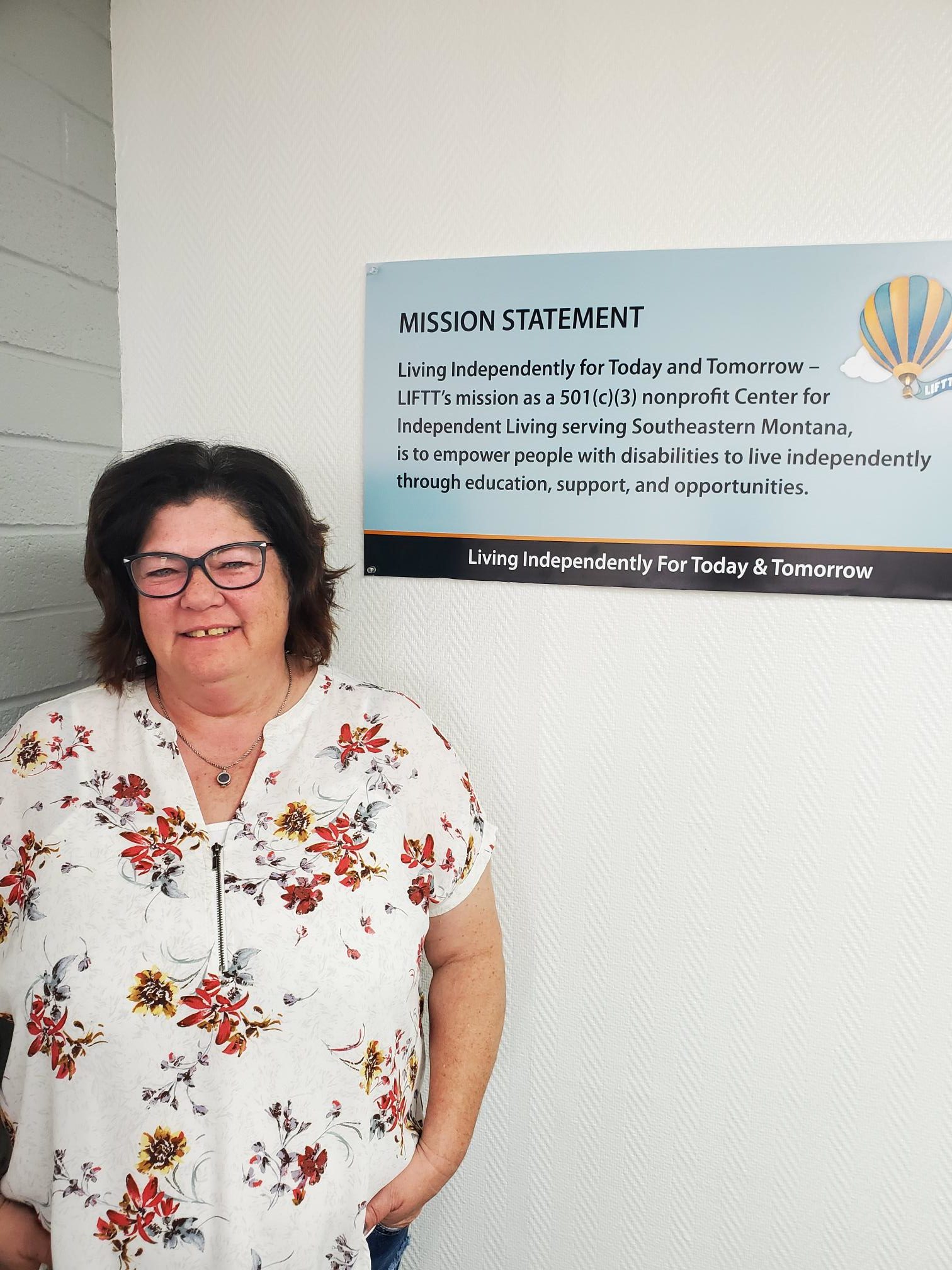
LIFTT Senior IL Specialst/Glendive Office Manager Jennifer Hawkinson; a white woman with black hair wearing glasses and a white shirt with red flowers

LIFTT Senior IL Specialist/ Glendive Office Manager Jennifer Hawkinson

For youth with a disability, there are options available for them to be not only more independent but to be successful in school and in life.


One resource for youth who need assistance with advocacy issues is the Montana Empowerment Center (MEC). MEC works with Montana families and their children up to young adulthood with disabilities to encourage and educate.


The Individuals with Disabilities Education Act (IDEA) is a law that makes available “a free, appropriate public education to eligible children with disabilities and ensures special education and related services to those children”.


An Individualized Education Plan (or Program) is also known as an IEP. This is a plan or program developed to ensure that a child with an identified disability who is attending an elementary or secondary educational institution receives specialized instruction and related services. The IEP is developed by a team of individuals from various educational disciplines, the child with a disability, family members, and/or designated advocates. Anyone can be invited to an IEP as long as the parent feels the input is for the benefit of the child’s education.


An IEP typically includes the following:

  1. The involvement and progress of the child with a disability in the general curriculum.
  2. All related services for which the child qualifies.
  3. Appropriate educational accommodations are necessary for the child to be successful.
  4. The child’s present levels of educational performance.
  5. Measurable annual goals and objectives for the child’s education.


What are 504 accommodations examples?

  1. preferential seating.
  2. extended time on tests and assignments.
  3. reduced homework or classwork.
  4. verbal, visual, or technology aids.
  5. modified textbooks or audio-video materials.
  6. behavior management support.
  7. adjusted class schedules or grading.
  8. verbal testing.


What’s the difference? A 504 plan is geared toward ensuring a student has equitable access to a learning environment. An IEP focuses on educational benefits and often includes direct services such as speech or occupational therapy. An IEP is monitored more closely as a 504 is not.


An IEP will not follow a student to college but a college can make academic accommodations if the students need them.

  1. Register with disabilities services.
  2. Provide a medical or psychological document describing the disability and how it impacts their daily functioning.
    1. Most colleges require a dated evaluation within the last three years such as an IEP.
  3. The student will need to meet with the disability office to discuss what accommodations are needed.
  4. The student must notify each professor that an accommodation is needed.
  5. The student must request to use an accommodation during class or testing.


The Workforce Innovation and Opportunity Act (WIOA) is designed to help job seekers access employment, education, training, and support services to succeed in the labor market. There are two groups for the youth. In-school youth are ages 14 to 21 and 25% of all funding goes towards their development and out-of-school youth are ages 16 to 24 and 75% of funding must go to those youth. The difference is that it is believed that in-school youth have resources available whereas out-of-school youth do not. Some of the services that can assist these youth are:

  1. Paying wages and workman’s comp to gain work experience.
  2. Purchases include but are not limited to:
    1. Clothing
    2. Personal care items
    3. Internet
    4. Computer
    5. Car repair if the value of the car repair does not exceed the value of the car
    6. Tools of the trade
    7. Rent

Basically, anything to get the youth to work or through training.


The website MTCIS.intocareers.org is another resource for youth as it offers assessments, college resources, and employment assistance such as resumes.


Pre-Employment Transition Services (Pre-ETS) are activities that provide an early start at job exploration for students with disabilities ages 14-21 to assist with transitioning from school to postsecondary education or employment. Vocational Rehabilitation and Blind Services (VRBS) works with schools and other organizations across the state to deliver Pre-ETS services. Pre-ETS services focus on

  1. Job exploration counseling
  2. Work-based learning experiences
  3. Counseling on post-secondary programs
  4. Workplace readiness training
  5. Self-advocacy

Youth transition services through LIFTT can also assist youth. Youth transitions through LIFTT can assist youth to learn life skills that will help them with the rest of their lives. Some examples of life skills are:

  1. Learning how to budget.
  2. Acquiring employment.
  3. How to rent an apartment.
  4. How to grocery shop.
  5. How to do laundry and other household chores.
  6. How to open a bank account
  7. How to balance a bank account
  8. How to pay bills.
  9. ETC

There are many services available to youth and their parents but the struggle is knowing what is available and what a parent’s rights are when it comes to advocating for their child. If you would like more information about the services available or have specific questions please contact LIFTT at (406) 259-5181 (Billings) or (406) 948-8500 (Glendive) and connect with an Independent Living Specialst.

About Living Independently for Today & Tomorrow (LIFTT): LIFTT is a Montana 501(c)3 corporation organized as a Center for Independent Living (CIL). With team members based in Billings and Glendive, LIFTT provides people with disabilities with programs and services that help empower them to break down the physical, bureaucratic, and cultural barriers that prevent them from being fully independent participants in their lives and communities throughout 18 counties in southeastern and southcentral Montana: Big Horn, Carbon, Carter, Custer, Dawson, Fallon, Garfield, Golden Valley, McCone, Musselshell, Powder River, Prairie, Richland, Stillwater, Wibaux, and Yellowstone. For more information, please visit liftt.org or download our mobile app on Apple or Google Play.


A newcomer’s perspective on LIFTT-#WednesdayWisdom

A newcomer’s perspective on LIFTT-#WednesdayWisdom

It’s another entry in our “Wednesday Wisdom”  series; Where we take you, our consumers, supporters, and readers inside of LIFTT to give a detailed picture of some portion of our programs, services, operations, and related topics. This week, CFC/SDPAS Program Facilitator Tabatha Smith offers a newcomer’s perspective on the learning curve faced by team members when they join LIFTT.

A newcomer’s perspective on LIFTT 

By Tabatha Smith

LIFTT CFC/SDPAS Program Facilitator 

LIFTT PCA Program Facilitator Tabatha Smith,. A white woman with brown hair wearing a white sweater

LIFTT CFC/SDPAS PCA Program Facilitator Tabatha Smith,

I came to LIFTT as an employee in November of 2022. Before I saw the ad on Indeed, I didn’t even know LIFTT existed. I was applying for employment everywhere to secure an income to provide for my children. Little did I know LIFTT would be a blessing I never saw coming.

I met Lanette, Freda, and Valerie at the first interview. With just the interaction with those three ladies, I was extremely hopeful from that point on. Then I did a second zoom interview involving Lanette, Freda, Valerie, and Carlos. That was when we confirmed I would start before Thanksgiving and work as a Personal Care Assistant (PCA) Facilitator. I was beyond thrilled and willing to undergo the training required for the position. I have been working at LIFTT for three months and have already passed my PCA Facilitator testing.

A few things I learned rather quickly are that Carlos is deaf, Lanette resides in Carbon County like me, Valerie has a great and quirky sense of humor, and Freda is the supervisor of both the PCA and Independent Living (IL) Programs. I learned that LIFTT stands for Living Independently for Today and Tomorrow and is a non-profit organization that helps people with disabilities in Yellowstone and 17 additional counties. LIFTT is funded through Medicaid, Part B, Part C, General Fund, and private grants. The funding LIFTT receives yearly varies.

Since being hired by the PCA department, I had to memorize what CFC/SD-PAS stands for Community First Choice/ Self Direct- Personal Assistant Services. I Learned that SDRs are Service Delivery Records, also known as Time Sheets. I am still learning, and the big-picture pieces are coming together. I am feeling more and more confident in my position. We triple-check all SDRs for every payroll period because they must comply with many policies enacted by Medicaid. A PCA Facilitator must know almost by heart all these policies to be able to review them. 3-4 sets of eyes review each piece of paper to catch mistakes that possibly got overlooked. There is no room for errors on our end. Paying attention to detail is a big part of what we do in the PCA department. If we overpay someone, it is up to LIFTT to pay Medicaid back. This process is a great opportunity for us to cooperate as a team.

I came to LIFTT with some previous knowledge of Self-Direct services. I used to work for a self-direct PCA program as a PCA through another agency in 2020 and 2021. During that time, I took care of my mother in her near-end days at home until her being at home was no longer an option. The CFC/SD-PAS program helps keep people in the comfort of their own homes and closer to family and friends. When members choose a self-direct program for their care services, they feel independence, safety, and security. They get the opportunity to control what is going on in their daily lives and how things get done. Members get a sense of comfort when they know their caregiver personally instead of receiving hands-on care from a stranger. Agency-based services could send a different caregiver often, leaving the member to receive care from multiple strangers or not due to workforce retention issues.

The Independent Living (IL) Program helps consumers with services like ADA home modification for ease of access and independence, information and referral, advocacy, youth transition, etc. An IL Specialist (ILS) can also help a member apply for SNAP, Medicaid, Social Security benefits, and grant funding for home modifications, among other things. The IL Program does a lot of outreach to get our name and what we do in the community. Some members using LIFTT’s services are working with the IL Program and the CFC/SD-PAS program simultaneously. Some members (persons who receive services) have been in the PCA program for years. Some members come to us and only need temporary assistance, while others need our long-term services.

LIFTT has taught me quite a bit so far, and I hope I continue to learn a lot more in time. Everyone here at LIFTT is very welcoming and informative and has made me comfortable enough to ask questions, even if I ask the same thing multiple times. I am excited to keep learning all about what LIFTT can offer to the community and help “LIFTT” people up in life. I believe in what LIFTT does and support our services and the team members who belong to LIFTT. I am looking forward to many years of service to the cause of independent living.

If I can assist you, please do not hesitate to contact me at (406) 294-5191 or tabathas@liftt.org.

About Living Independently for Today & Tomorrow (LIFTT): LIFTT is a Montana 501(c)3 corporation organized as a Center for Independent Living (CIL). With team members based in Billings and Glendive, LIFTT provides people with disabilities with programs and services that help empower them to break down the physical, bureaucratic, and cultural barriers that prevent them from being fully independent participants in their lives and communities throughout 18 counties in southeastern and southcentral Montana: Big Horn, Carbon, Carter, Custer, Dawson, Fallon, Garfield, Golden Valley, McCone, Musselshell, Powder River, Prairie, Richland, Stillwater, Wibaux, and Yellowstone. For more information, please visit liftt.org or download our mobile app on Apple or Google Play.

You can donate to LIFTT by clicking here.

Social Security Ticket to Work Program-#WednesdayWisdom

Social Security Ticket to Work Program-#WednesdayWisdom

It’s another entry in our”Wednesday Wisdom”  series; Where we take you, our consumers, supporters, and readers inside of LIFTT to give a detailed picture of some portion of our programs, services operations, and related topics. This week, Administrative Assistant Collette Ostermiller explains the Social Security Administration’s Ticket to Work Program which allows SSDI beneficiaries such as herself to at least attempt a  return to work without losing needed benefits.

The Ticket to Work Program and how it can help a person with a disability

by Collette Ostermiller, Administrative Assistant 

LIFTT administrative assistant and Social Security Ticket to Work program participant Collette Ostermiller

Many of you might now know, but the Social Security Administration (SSA)’s “Ticket to Work Program” is why I was able to come to work at LIFTT. I believe there are lots of people who, like me, are living with a disability and will benefit from participating in the program, which is the reason why I want to talk about it.

The “Ticket to Work Program” supports people ages 18 through 64 who receive SSA disability benefits (SSDI) and want to work. Eligible beneficiaries are called ‘Ticket Holders.’ Therefore, I am a proud ‘Ticket Holder’. Individuals qualify for this free program when they work with service providers called Authorized Ticket Program service providers, such as Employment Networks (EN) or the State Vocational Rehabilitation and Blind Services (VRBS). They provide career counseling, vocational rehabilitation, job placement assistance, and training. The service provider will be an essential part of the beneficiary’s “employment team” to help them on their journey to financial independence. I worked with VRBS as my individualized support services. VRBS referred me to Bob Snizk from Montana Employment Consultants.

The Social Security Administration (SSA) reviews the medical condition of the ticket holders from time to time to re-determine whether they still have a disability through a process called the medical Continuing Disability Review (CDR).

The “Ticket to Work Program” is a type of SSA Work Incentive. Work Incentives make it possible for anyone who receives Social Security benefits to explore work opportunities while still receiving benefits. Participants in the “Ticket to Work Program” are eligible to maintain their SSA benefits, including Medicaid/Medicare, while they work, depending on their income.

Recipients of social security benefits have the opportunity to work with confidence, knowing they may be able to keep some or all of their benefits during their transition period.

Social Security has many Work Incentives designed to fit individual needs and situations. There is more information about SSA’s Work Incentives and how they can work for recipients of Social Security benefits on the website choosework.ssa.gov. Social Security also publishes a guide to employment supports known as the “Red Book” which is available online or by contacting the SSA.

For a trial work period of 9 months (only), an eligible participant could make $1,350.00 in 2022 and $1,470.00 in 2023. As you can see, the maximum amount was increased for 2023, making it even more inviting to disabled people. In order NOT to cancel SSDI, the amount was limited to $970.00 per month in 2022 and $1050.00 in 2023, ONLY after the nine months elapsed. This figure is ‘pre-tax income.’

For instance, a schedule of 3 hours a day, five days a week, at $15.00 per hour equals $225.00. If a person is going to take the regular hour option only for the month, it would equal only 31 hours. However, when there is a five-week month, a person would need a few hours off to maintain SSDI. On the other hand, If the beneficiaries opt for the higher bracket, which is limited to nine months, they can make up to $337.50 per week.

A person can only be on’ The Ticket To Work” for 60 months. Afterward, the beneficiary can choose to roll over to an “Extended Period Of Eligibility.” Thus, this is a good, cost-free program that again can help with work options for the Disabled.

If you have any additional questions about the” Ticket to Work Program,” I will respond. You can reach me at (406) 259-5181 or colletteo@liftt.org.

About Living Independently for Today & Tomorrow (LIFTT): LIFTT is a Montana 501(c)3 corporation organized as a Center for Independent Living (CIL). With team members based in Billings, and Glendive, LIFTT provides people with disabilities with programs and services that help empower them to break down the physical, bureaucratic, and cultural barriers that prevent them from being fully independent participants in their lives and communities throughout 18 counties in southeastern and southcentral Montana: Big Horn, Carbon, Carter, Custer, Dawson, Fallon, Garfield, Golden Valley, McCone, Musselshell, Powder River, Prairie, Richland, Stillwater, Wibaux, and Yellowstone. For more information, please visit liftt.org or download our mobile app on Apple or Google Play. 

The PCA Program Service Delivery Record & Billing-#Wednesday Wisdom

The PCA Program Service Delivery Record & Billing-#Wednesday Wisdom

It’s another entry in our”Wednesday Wisdom”  series; Where we take you, our consumers, supporters, and readers inside of LIFTT to give a detailed picture of some portion of our programs, services, and operations. This week, Kasey Mook clerical assistant in LIFTT’s Self Direct Personal Care Assistance Program (SDPAS) takes us through the Service Delivery Record (SDR) process utilized by LIFTT consumers and their personal care attendants to document services rendered so that correct billing and payment may occur.  

Service Delivery Records & Billing in the LIFTT SDPAS Program

By Kasey Mook, PCA Program Assistant 

PCA program assistant Kasey Mook. A white woman with dark hair wearing glasses and a two tone orange sweater

LIFTT SDPAS program clerical assistant Kasey Mook

Service Delivery Records (SDRs) or timesheets are turned in every other Monday in at LIFTT’s front desk. They are then reviewed and corrected and are properly input into our billing system and spreadsheets every other week. The Personal Care Attendant (PCA) Department refers to this process as SDR week. SDRs, also commonly referred to as timesheets, are sheets the PCA fills in with hours and tasks consistent with the consumers’ service plans and profiles. Timesheets come in four different forms: State Plan Service Delivery Record (SDR), Shopping and Community Integration (travel sheet), Medical Escort Record, and Home and Community Based Waiver Personal Assistance Services (HCBS waiver). When Community First Choice (CFC) was originally implemented, there were several more SDRs in use. LIFTT worked with Medicaid Administrators to pare the documents down to the 4 that we now use, as there was confusion among a lot of our consumers regarding the use of the documents. SDRs specifically contain tasks consisting of Activities of Daily Living (ADL), Health Maintenance Activities (HMA), and Instrumental Activities of Daily Living (IADL) along with time entered for those tasks.

The PCA Department receives timesheets in one of three ways: manually via original paper copy, by fax or by email. Once timesheets are collected and timestamped by the front desk team, they are logged into a binder at the reception desk labeled “SDRs Received.” This binder consists of lists of attendants and the consumers they work for. When logging timesheets, the date received along with the form (SDR, Travel, Medical Escort, or HCBS Waiver) are written down. Each consumer will receive a checklist with their corresponding timesheets for the following pay period that is sent to the PCA Department for review. The front desk logging is very important because it is proof of when and if a timesheet was even received.

Reviewing timesheets usually takes all day on SDR Monday, along with Tuesday as well. During that time, the PCA Department evaluates each individual timesheet to confirm hours and tasks are being used appropriately according to the consumers’ service plan and profile. If a timesheet is incompatible with a service plan, the attendant or consumer will be called in to make corrections by 5 pm that following Thursday. If corrections are not made by that time, the timesheets will not be processed and the attendant will not be paid until the following pay period, deeming the paperwork as “late.” It is unlawful for LIFTT to pay a PCA timesheet that is in question or has major errors. The LIFTT PCA Program follows Medicaid policies explicitly.

Once corrections are completed, mileage and hours worked are entered into our billing software, Home Health Services Manager (HHSM), and two separate payroll spreadsheets. One spreadsheet is a waiver usage sheet, that records waiver hours and miles by the month. (This waiver spreadsheet is put together at the end of the month in a report and is sent to Billings and Sidney Waiver offices.) The other, being the PCA Department’s typical spreadsheet, is used every pay period. It contains state and waiver hours, along with state mileage and the occasional medical mileage. (Medical miles are paid the following month. Example: Medical miles from September will not be paid until October.)

Designed by a software engineer named Alan Yoder, HHSM is software that was created specifically with Centers for Independent Living (CILs) in mind. This software contains all LIFTT’s active PCA consumers and their information such as diagnosis codes, Medicaid numbers, service plans, etc. to properly bill each consumer’s claim. This software is also designed to prevent overages in billing or usage. Once all hours are entered into billing (HHSM) and spreadsheets, these spreadsheets will be reviewed by three members of the PCA Department and sent up to Karie for payroll upon completion.

Every Monday, the 835 is downloaded and posted to HHSM. 835 is an electronic file that flips claims to be paid or denied, without having to do it manually. This file also shows additional payments for bonuses and health insurance reimbursement for our attendants. A billing process is also completed every Wednesday and uploaded to Montana’s Medicaid portal.

835 does not show why claims are denied, but remittance codes do. These codes are found in the electronic statement of remittance (eSOR) report. An eSOR report is a computerized printout of all claims submitted up until the previous Wednesday. The status of these claims is unknown until the following Tuesday when the eSOR report is uploaded to Montana’s Medicaid portal. These reports are then downloaded and stored in the shared file for easy accessibility throughout the year.

In conclusion, the work we do is very technical and requires a lot of attention to detail.

Thanks.

Kasey Mook, PCA Program Assistant, If you have any questions or comments please send an email to kaseym@liftt.org 

About Living Independently for Today & Tomorrow (LIFTT): LIFTT is a Montana 501(c)3 corporation organized as a Center for Independent Living (CIL). With team members based in Billings, and Glendive, LIFTT provides people with disabilities with programs and services that help empower them to break down the physical, bureaucratic, and cultural barriers that prevent them from being fully independent participants in their lives and communities throughout 18 counties in southeastern and southcentral Montana: Big Horn, Carbon, Carter, Custer, Dawson, Fallon, Garfield, Golden Valley, McCone, Musselshell, Powder River, Prairie, Richland, Stillwater, Wibaux, and Yellowstone. For more information, please visit liftt.org or download our mobile app on Apple or Google Play. 

The CFC/SDPAS  PCA Program Intake Process-#WendesdayWisdom

The CFC/SDPAS PCA Program Intake Process-#WendesdayWisdom

This is another post in a series we are calling “Wednesday Wisdom” Where we take you, our consumers, supporters, and readers inside of LIFTT to give a detailed picture of some portion of our programs and operations. This week, CFC/SDPAS PCA Program Facilitator Valerie Rowlison takes readers on a step-by-step journey through the process by which a new consumer comes on to LIFTT’s CFC/SDPAS PCA program’s services.

The CFC/SDPAS Intake Process

by

Valerie Rowlison

LIFTT CFC/SDPAS PCA Program Facilitator

LIFTT CFC/SDPAS PCA Program Facilitator Valerie Rowlison, a female with red hair wearing glasses and a green shirt with floral designs

LIFTT CFC/SDPAS PCA Program Facilitator Valerie Rowlison

By “intake process” I mean the well-defined method by which a person becomes a consumer of LIFTT’s PCA Program and begins to receive CFC/SDPAS services (Community First Choice/ Self Direct Personal Assistance Services). The intake process is the bridge between the Consumer/Personal Representative (PR), Personal Care Assistant (PCA), and LIFTT. In many ways, my paper is a continuation of what Lanette Brown wrote in “What qualifies a person to become a consumer of the PCA program or CFC/SDPAS program?” presented and posted on January 3, 2023.

Once LIFTT’s PCA Program receives the consumer’s profile from Mountain-Pacific Quality Health – MPQH1, LIFTT has ten (10) calendar days to complete the intake and start the CFC/SDPAS services observing the list of tasks authorized by the MPQH nurse.

The PCA Facilitator will then call the consumer/PR and inform them what specific CFC/SDPAS PCA tasks have been authorized by the MPQH nurse and schedule an appointment to complete the intake. Until the COVID-19 Public Health Emergency (PHE) is terminated the intake process can be completed over the phone, at home, or at LIFTT’s office. The preferred place for the intake is the consumer’s home because it will allow the PCA Facilitator to observe the home environment and its safety, as well as the existence of barriers that need to be removed by ramps, accessible bathrooms, toilet lifts, Hoyer lifts, etc. The consumer is also more at ease when they are in their home environment.

The PCA Facilitator will gather the forms required to complete the intake (packet), and fills them out using all the information received during the referral process with as much detail as possible. When the packet is mailed, the PCA Facilitator will mark each form with sticky notes containing explanations and indicating where the Consumer/PR should sign, what copy to keep and what copy to return to LIFTT.

We have a red folder because the color makes it easier to identify the folders that correspond to intake processes. This red folder will store all the PCA applications, along with blank Service Delivery Record (SDR) forms. The state of Montana is planning to implement what is called Electronic Visit Verification (EVV) around October 2023. The EVVs will replace the SDRs and extinguish the red folder because all the records will be kept electronically.

A blue folder containing copies of all the Consumer/PR paperwork is given to them during the intake process. The Consumer/PR will keep this blue folder at home and use it to continue to file additional paperwork. Both the red and blue folders will have copies of forms that have been signed and dated before services begin.

Among the mandatory forms that LIFTT’s PCA Program obtains from Consumer/PR are the following:

  1. Form SLTC-160 – The Health Care Professional Authorization Form which the doctor must sign/date, and fax to LIFTT before the CFC/SDPAS services can begin.
  2. Agency List- list of service agencies that consumers may currently or recently receive services with.
  3. Media release (optional)
  4. Solicitation (Statement they contacted and initiated services on their own accord)
  5. Form SLTC-159 – Member/personal representative agreement
  6. LIFTT policies and procedures book
  7. Hospitalization policy
  8. Member/Client Fraud policy
  9. Consumer Rights and Appeals Process
  10. Safety Policy Statement
  11. Acknowledgment page
  12. HIPPA (Health Insurance Privacy and Portability Act)
  13. Waiver and release form
  14. Backup plan and information
  15. Form SLTC-200 – Person Centered Planning (PCP) form (completed by the Plan facilitator if that is not the LIFTT facilitator.)
  16. A sheet explaining what a unit is
  17. Form SLTC-155 -Copy of MPQH profile
  18. Form SLTC 175- Service plan
  19. Current Payroll Schedule
  20. Sample SDRs (SDR, Shopping and Community Integration Mileage Record, Medical Escort Form)
  21. Sample Medical escort appointment verification
  22. List of what Medicaid requires us to have if we are paying PCA to assist at a medical appointment
  23. ER/Outpatient procedures/Hospitalization
  24. Form SLTC 210- Recertification Document
  25. Education Checklist
  26. Give Consumer information on:
  27. Quick reference guide
  28. Acronyms List
  29. SDR tip sheet
  30. SDR Timesheets- outline of how to send SDR by email
  31. Abuse and neglect information
  32. The PCA application for employment must be completed and include copies of at least 2 forms of identification (ID), to comply with the requirement of the United States Citizenship and Immigration Services (USCIS) I-9 form. For those Consumers who will receive transportation services, a copy of the PCA’s driver’s license and car insurance is mandatory.

If the intake process takes longer than ten (10) days LIFTT must present a justification to MPQH explaining the reasons for the delay. Unfortunately, delays happen often and they are caused by incomplete applications, LIFTT not receiving the signed Health Care Professional Authorization timely, or delays in mail delivery.

Once everything is returned and in hand, the Consumer/PR is notified they can start documenting services on the SDRs/Timesheets. LIFTT faxes Form SLTC-163 known as Agency Admit Sheet (AAS) to MPQH which gives the information about the intake date, start date, and Consumer diagnosis.

Once the intake is completed, the LIFTT’s PCA Facilitator completes the opening statement and writes a case note summarizing the intake meeting called “intake statement,” completing the CIL Suite entry for disability, goals. services, and programs. All the forms are scanned into the CIL Suite document center. A file is established, and the hard copy forms are kept there for as long as the consumer is active.

The time necessary to gather, prefill and prepare for intake is approximately an average of 2 hours, however, the completion of an intake from start to finish may consume up to six (6) hours.

Case noting each step of the process is crucial. As we all know, if it’s not documented it did not happen. Once the intake is completed, the Consumer is added to the caseload and is required to participate in a recertification process at six months and the annual review each year.

1 https://www.mpqhf.org/corporate/ accessed December 2022.
 
About Living Independently for Today & Tomorrow (LIFTT): LIFTT is a Montana 501(c)3 corporation organized as a Center for Independent Living (CIL). With team members based in Billings, and Glendive, LIFTT provides people with disabilities with programs and services that help empower them to break down the physical, bureaucratic, and cultural barriers that prevent them from being fully independent participants in their lives and communities throughout 18 counties in southeastern and southcentral Montana: Big Horn, Carbon, Carter, Custer, Dawson, Fallon, Garfield, Golden Valley, McCone, Musselshell, Powder River, Prairie, Richland, Stillwater, Wibaux, and Yellowstone. For more information about our programs and services, please visit liftt.org or download our mobile app on Apple or Google Play. 
Integration of Independent Living & Personal Care Attendant Services-#WednesdayWisdom

Integration of Independent Living & Personal Care Attendant Services-#WednesdayWisdom

This is the third post in a series we are calling “Wednesday Wisdom” Where we take you, our consumers, supporters, and readers inside of LIFTT to give a detailed picture of some portion of our programs and operations. This week, Freda Mook manager of both LIFTT’s Independent Living and Community First Choice  Programs discusses the similarities and differences between IL and PCA services and how LIFTT strives to integrate them to best serve our consumers.  

Integration of Independent Living and Personal Care Attendant Services – How they are similar, why they are different,

by Freda Mook

Manager of LIFTT’s Independent Living (IL) & Community First Choice (CFC) Programs

LIFTT IL & CFC program manager Freda Mook, A White woman with brown hair streaked blond wearing glasses and a tie die shirt in shades of purple

LIFTT Independent Living & Community First Choice Program Manager Freda Mook

As the manager of LIFTT’s Independent Living (IL) and Medicaid Community First Choice (CFC) Programs, I can say that the two programs are simultaneously similar and different. This statement Is not as absurd as it sounds. It is known as a veridical paradox because even though it seems to contradict itself, it is nonetheless true. On the one hand, the IL and CFC programs are similar, analogous, comparable, and complimentary. On the other hand, they are also different, distinct, and unique. They are similar because they are both person-centered. They are different because the work performed by the IL Specialists is not as regulated by policies and procedures as the PCA facilitators’.

The IL and CFC Services are person-centered, meaning that the Consumer receiving care is at the center of the entire planning process. IL Specialists refer to this principle as self-determination, self-help, and self-advocacy. PCA Facilitators are guided and inspired by the Person Centered Planning (PCP)  approach, which gives the Consumer/Person choice and control in important areas. PCP is at the center of everything right about health and care delivery to persons with disabilities because it addresses the specific needs of real people. IL Specialists and PCA Facilitators begin their intake process by learning how their Consumer/Person wants to live because that is what they are concerned about considering that this idea is at the core of independent living.

According to the Administration for Community Living (ACL), “Person-Centered Planning (PCP) is a process for selecting and organizing the services and supports that an older adult or person with a disability may need to live in the community. Most importantly, it is a process directed by the person who receives the support.” Therefore, there is no doubt that the principles of PCP apply to both IL and CFC Programs.

The PCP approach makes it possible for LIFTT to integrate both programs, share Consumers/Persons and refer Consumers/Persons to one another. Using the PCP approach, IL Specialists and PCA Facilitators identify the Consumer/Person’s strengths, goals, medical needs, needs for home- and community-based services, and desired outcomes.

The PCP Process aligns with the goal and service planning done in IL Services because it puts the Consumer in the driver’s seat regarding what they want to accomplish in life. PCP is in harmony with the Independent Living philosophy because it recognizes that people with disabilities should have the same civil rights, options, and control over choices in their own lives, as people without disabilities.

The term “Person-Centered Planning” is often used when some of the processes are being discussed and implemented, but there are different procedures in different states. Goal setting with the people we serve is a fluid, ongoing process and can be a rewarding learning experience for both IL Specialists and Consumers.

For many individuals, PCP has meant fun, relaxed, positive meetings. PCP is personalized individual care. It gives the Consumer/Person a chance to pursue their dreams, interests, and goals and enables participation in one’s community. PCP focuses on the whole person, not just the need for care in a single area of life. It allows a person to make meaningful connections, own significant possessions, and pursue happiness and wellness according to their needs and personal goals. It leads to living a barrier-free life.

The IL Program provides less intrusive, less “medically” based services and is not involved in the Consumer’s daily affairs. Still, it does not mean that their involvement is less relevant to the Consumer’s life. Both Departments offer much in the way of life improvement for Consumers, and both departments should work more closely together to ensure that no needs go unmet.

Promoting the integration of LIFTT’s IL and CFC programs has been a dynamic, multi-actor engagement process. It facilitated effective participation by LIFTT’s consumers, IL Specialists,  and PCA Facilitators fostering a shared sense of responsibility for the future of independent living in Eastern Montana. This integration process ensures that we all work harmoniously to increase our consumers’ independent living levels.

If you have any questions about the services LIFTT provides through any of these programs, please do not hesitate to contact me at 406-294-5182 or fredam@liftt.org.

About Living Independently for Today & Tomorrow (LIFTT): LIFTT is a Montana 501(c)3 corporation organized as a Center for Independent Living (CIL). With team members based in Billings, and Glendive, LIFTT provides people with disabilities with programs and services that help empower them to break down the physical, bureaucratic, and cultural barriers that prevent them from being fully independent participants in their lives and communities throughout 18 counties in southeastern and southcentral Montana: Big Horn, Carbon, Carter, Custer, Dawson, Fallon, Garfield, Golden Valley, McCone, Musselshell, Powder River, Prairie, Richland, Stillwater, Wibaux, and Yellowstone. For more information, please visit liftt.org or download our mobile app on Apple or Google Play. 


Qualifications for LIFTT”s CFC/SDPAS program-#WednesdayWisdom

Qualifications for LIFTT”s CFC/SDPAS program-#WednesdayWisdom

Editors Note: This is the second post in a series we are calling “Wednesday Wisdom” Where we take you, our consumers, supporters, and readers inside of LIFTT to give a detailed picture of some portion of our programs and operations. This week Personal Care Assistance (PCA) program facilitator Lannette Brown reviews the qualifications for the LIFTT Community First Choice Self Direct Personal Assistance Program (CFC/SDPAS) also known as the Personal Care Assistant (PCA) program. 

What qualifies a person to become a consumer of the LIFTT PCA program  (CFC/SDPAS) program?

by Lanette Brown, LIFTT PCA Program Facilitator 


Lanette Brown awhite woman with brown hair wearing glasses, a blue,teal and purple sweater and a black shirt

LIFTT PCA Program Facilitator Lanette Brown

Allow me to start by saying that LIFTT’s PCA Program is one of the many CFC/SDPAS programs that exist around the country. It provides services to the members of the community who live with a disability. The acronyms CFC stands for Community First Choice and SDPAS for Self-Direct Personal Assistance Services. According to the Montana Department of Public Health and Human Services (DPHHS),[1] both CFC and SDPAS can be described as “programs designed to provide long-term supportive care in a home setting.” Thanks to CFC/SDPAS, elderly and disabled individuals can stay at home and avoid institutionalization. These services meet the specific needs of the recipient in a person-centered manner, meaning putting people and their families at the center of decisions and seeing them as experts, working alongside professionals to get the best outcome.[2] The services are provided by caregivers commonly referred to as personal care assistants (PCAs). It is the recipient of services who chose and train the PCAs according to their needs, living situation, and availability of caregivers.


First, to receive PCA services from LIFTT, the candidate must live in one of the  18 counties in Southeastern and South Central Montana that comprise LIFTT’s service area, Big Horn, Carbon, Carter, Custer, Dawson, Fallon, Garfield, Golden Valley, McCone, Musselshell, Powder River, Prairie, Richland, Stillwater, Wibaux, and Yellowstone.

Secondly, the individual in need of CFC/SDPAS services must call LIFTT and choose option number 3 of the telephone menu of options to talk to one of the team members of LIFTT’s PCA Program  Valerie Rowlison, valerier@liftt.org or (406) 294-5208, Tabatha Smith, tabathas@liftt.org or (406) 294-5191, Kasey Mook, kaseym@liftt.org or (406) 606-1762 and/or Lanette Brown, lanetteb@liftt.org or (406) 294-5184

Thirdly, the candidate must have a health condition that limits their ability to perform activities of daily living

Fourthly, The candidate must be eligible to enroll with “standard” or “full” MEDICAID.  I believe everybody knows this but would like to mention that MEDICAID is a federal and state healthcare program available to individuals who meet specific requirements. States run their MEDICAID programs independently and provide at least half of the funding for the program. Adult members of Montana families whose household countable income is less than 25% Federal Poverty Level (FPL) are eligible for standard MEDICAID. Adult members of Montana families whose household countable income is between than 25% and 138% FPL are eligible for Medicaid Expansion.[3] Full benefit MEDICAID coverage refers to the package of services, beyond coverage for Medicare premiums and cost-sharing, that certain individuals are entitled to when they qualify under eligibility groups covered under a state’s MEDICAID program.[4]

Fifthly, the candidate who wants to receive PCA services from LIFTT must know someone who can be their caregiver or personal care assistant (PCA).

Sixthly, provided the candidate meets the requirements listed above, they must be able to understand and complete paperwork or identify someone who can be their personal representative (PR).[5]  The PR must be 18 years of age or older.  LIFTT will need the PR’s full name, address, and telephone number, and the PR will have to communicate with one of the PCA Program team members whom we refer to as facilitators. Once the candidate is admitted to the program, he becomes a consumer and is assigned to one of the program facilitators.

Seventhly, CFC/SDPAS require hands-on assistance[6] with at least four of the following tasks:  bathing, dressing, hygiene, positioning, transferring, mobility, meal preparation, eating, exercise, and medication reminders.  After meeting these tasks, the following ones may be added: light house cleaning, laundry, shopping (for dietary & medical items only), community integration, correspondence assistance, and yard hazard removal.  The medical escort service also requires hands-on assistance and can be allowed.  Allow me to clarify that medical escort isn’t just for transportation, and this program isn’t a house cleaning or shopping or medical transportation program.  There is very little time for these tasks.

Eighthly, during the application process, the PCA Program team members will ask the candidate to provide full name, address, telephone number where they can be always reached, MEDICAID number, and Social Security number. This information will allow LIFTT to access the Montana Access to Health Web Portal and verify the candidate’s Medicaid eligibility.

Ninthly, a primary diagnosis and other diagnoses must correlate with the need for hands-on assistance.  Reminders do not require much time, so they don’t translate to a big need.

Tenthly, the candidate must identify a primary Doctor who will prescribe the CFC/SDPAS services.

Eleventhly, the Consumer/Member or PR needs to be able to: (a) direct their own services, (b) read and understand the paperwork, (c) respond to request for information, (d) sign off on Service Delivery Record (SDR) sheets for accuracy, and (e) direct their PCA.

Twelfthly, it is the Consumer/Member/PR who hires, trains, and fires their caregivers. They also need to know someone that can back up that primary PCA if there is an emergency such as illness, accident, or vacation.

After obtaining the information and talking with the Consumer/Member/PR, LIFTT will send them a copy of the CFC/SDPAS booklet, program information sheet, and LIFTT brochure. They are asked to call their PCA Facilitator immediately after reading the information to confirm if they are still interested in participating in the CFC/SDPAS program.  The PCA Facilitator then completes the process by entering the information into LIFTT’s database program called CIL Suite and adds the PCA service to the consumer’s file.

All the information collected during the application process is presented to LIFTT’s PCA Program team for consideration, The team makes sure the candidate is someone who will be a good fit for the CFC/SDPAS program and will be able to work with LIFTT.  If all PCA Team members agree to bring the candidate into the program, the process continues. If LIFTT decides not to approve the application, one of the PCA Facilitators will call the candidate to notify them about the decision and provide them with the names and telephone numbers of other agencies that provide CFC/SDPAS services. When authorized by the candidate, we will send these agencies this information collected during the application process.

It happens that candidates may fail to get back to LIFTT. In this case, LIFTT follows up with them via telephone up to three (3) times.  If they do not respond, and LIFTT is unable to reach them the process stops.  If they respond and want to continue, LIFTT completes a CFC/SDPAS Member Referral sheet and faxes it to Mountain-Pacific Quality Health (MPQH).[7] The MPQH nurse has ten (10) working days to complete a pre-screen/interview with the consumer, develop their profile outlining the tasks the candidate is authorized to have completed by their personal care assistant (PCA), and establish how much time the PCA is allowed to use to complete those tasks over a two-week period.  Once this paperwork is sent to LIFTT, the PCA Facilitator reaches out to the Consumer/Member/PR to set up a day and time to complete the intake process and welcome the individual as a consumer of the PCA program or CFC/SDPAS program.

If you need additional information or would like to complete an application, please do not hesitate to contact me at lanetteb@liftt.org or (406) 294-5184.

[1] https://dphhs.mt.gov/sltc/csb/#:~:text=The%20Community%20First%20Choice%20and,to%20remain%20in%20their%20homes accessed December 2022.

[2] https://healthinnovationnetwork.com/system/ckeditor_assets/attachments/41/what_is_person-centred_care_and_why_is_it_important.pdf accessed December 2022

[3] https://dphhs.mt.gov/assets/2021biennialreports/MedicaidinMontana2021.pdf accessed December 2022

[4] https://www.cms.gov/Medicare-Medicaid-Coordination/Medicare-and-Medicaid-Coordination/Medicare-Medicaid-Coordination-Office/Downloads/MedicareMedicaidEnrolleeCategories.pdf accessed December 2022

[5] Under the Rule, a person authorized (under State or other applicable law, e.g., tribal or military law) to act on behalf of the individual in making healthcare-related decisions is the individual’s “personal representative.” Section 164.502(g) provides when, and to what extent, the personal representative must be treated as an individual for purposes of the Rule. https://www.hhs.gov/hipaa/for-professionals/privacy/guidance/personal-representatives/index.html#:~:text=Under%20the%20Rule%2C%20a%20person,the%20personal%20representative%20must%20be accessed December 2022.

[6] Hands-On Assistance — the physical assistance of another person without which a person would be unable to perform one or more of the activities of daily living (ADL). Some long-term care (LTC) insurance policies define the inability to perform an ADL without hands-on assistance as a trigger for policy benefits. https://www.irmi.com/term/insurance-definitions/hands-on-assistance#:~:text=Hands%2DOn%20Assistance%20%E2%80%94%20the%20physical,a%20trigger%20for%20policy%20benefits. Accessed December 2022.

[7] https://www.mpqhf.org/corporate/ accessed December 2022.

About Living Independently for Today & Tomorrow (LIFTT): LIFTT is a Montana 501(c)3 corporation organized as a Center for Independent Living (CIL). With team members based in Billings, and Glendive, LIFTT provides people with disabilities with programs and services that help empower them to break down the physical, bureaucratic, and cultural barriers that prevent them from being fully independent participants in their lives and communities throughout 18 counties in southeastern and southcentral Montana: Big Horn, Carbon, Carter, Custer, Dawson, Fallon, Garfield, Golden Valley, McCone, Musselshell, Powder River, Prairie, Richland, Stillwater, Wibaux, and Yellowstone. For more information, please visit liftt.org or download our mobile app on Apple or Google Play. 

Successful CIL Suite Entries and Data Management @LIFTT- #WednesdayWisdom

Successful CIL Suite Entries and Data Management @LIFTT- #WednesdayWisdom

Editors Note: This is the first of many posts in a series we are calling “Wednesday Wisdom” Where we take you our consumers, supporters, and readers inside of LIFTT to give a detailed picture of some portion of our programs and operations. This week outgoing LIFTT Data & Quality Control Manager Steve Woodard gives his perspective on how LIFTT uses the CIL Suite data system to manage our caseload and prepare the necessary reports required of us by our funders. 

Data and Quality Control Manager Steve Woodard. Steve is a White male with gray hair and a gray mustache

LIFTT Data and Quality Contol Manager Steve Woodard

How to be successful in your CIL Suite Data Entry

by Steve Woodard, Data Manager/Quality Control December 20, 2022

CIL MANAGEMENT SUITE (CIL Suite) is the database system used by LIFTT to store general funding information bout the public and private grants that pay for our operational expenses, including resource development and fundraising, Independent Living (IL) and the Personal Care Assistant (PCA) Programs. Many other Centers for Independent Living (CILs) in the United States (US) use CIL Suite. The records stored in CIL Suite demonstrate that LIFTT complies with the independent living philosophy and that our board of directors, employees, and the individuals receiving services from LIFTT have significant disabilities. We use CIL Suite to keep track of the number of services we provide, consumers we serve, written independent living (IL) plans, and all concrete cases in a fiscal year from October 1 to September 30. Thanks to CIL Suite, we can follow the progress made by consumers in achieving their IL goals. As LIFTT’s Data Manager/Quality Control, it is my job to validate all the information entered and stored in CIL Suite.

CIL Suite manages the work performed by IL specialists and PCA Facilitators, their productivity, and compliance with policies and procedures. CIL Suite makes it easier for us to write case notes and collect specific information about disabilities and services we provide county by county. It also has a document center which allows us to store documents digitally.

LIFTT uses the information in our CIL Suite to compose the quarterly reports we submit to the State of Montana. It also allows us to prepare and submit an Annual Performance Report (PPR) to the Administration for Community Living (ACL). CIL Suite also enables us to search for information by name, phone number, city, county, and type of disability. Therefore, IL Specialists and PCA Facilitators must write complete and accurate data entries because they are critical for the reports LIFTT must submit to grant funders. The data entry demonstrates that LIFTT is doing a great job in helping the disabled people living in its service area (Southeastern Montana).

After working as an IL Specialist for ten years, I became LIFTT’s Data Manager & Quality Control in late 2019. Therefore, I have been doing this job for approximately three years. My experience qualifies me to say that one must look at their case notes critically and make sure anyone who reads them will be able to understand them clearly. What IL Specialists and PCA Facilitators are doing to provide services to their consumers will only be known through their data entry. There is no other way to record and manage a case. When doing data entry, IL Specialists and PCA Facilitators should think of their colleagues, supervisors, and even state or federal auditors who will have to read and understand what they wrote. I repeatedly tell my colleagues to keep in mind that managers and directors use the data they enter to prepare board, state, and federal reports. I ask them to write the truth in a way that anyone can understand; remember that the information will be reviewed, and their data will determine whether LIFTT is doing its job.

That is why I urge my co-workers to focus, think clearly about their actions, and write as if they were talking to someone. IL Specialists and PCA Facilitators must set a schedule and self-audit their writing. By doing that, they will catch their own mistakes, make corrections, and improve the quality of their work. It is essential to ask for help when unsure about how to write an entry. It is easier to write a correct opening statement, case note, closing statement, and success story than to correct them. We have an excellent IL Training Manual that we can use for guidance. I keep telling my colleagues to consult the manual; if they don’t find answers to their questions, they should ask a supervisor for help. It is also essential to communicate with the supervisor before correcting the data entries to determine whether the corrective action is accurate. In doing so, they might discover that their idea is the right thing to do!

CIL Suite has fantastic tutorials at https://cilsuite.com under the “Support” function. These tutorials will prove to be very useful to any user. If you are an IL Specialist or PCA Facilitator working for an Independent Living Center (ILC), take the time to review these resources from time to time. CIL Suite also provides weekly training, and they usually happen on Thursdays. If you register your name, you will receive weekly notifications about upcoming training. Attending CIL Suite training will help you better understand the data entry and the system.

In conclusion, allow me to point out that CIL Suite has an “Audit” function that enables you to identify your cases that might need attention. The audit list identifies areas that will impact the PPR/704 or annual performance report due to the federal government at the end of each fiscal year. Be sure to search those areas. I would suggest you do this weekly.

Lastly, listen actively and carefully, and ask questions during the IL Team Meetings. Try to come to the meetings with questions in mind and ask them. This is an excellent time to learn and improve our ability to do data entry! Please let me know if you have any questions. I am available at (406) 294-5188 and stevew@liftt.org 

About Living Independently for Today & Tomorrow (LIFTT): LIFTT is a Montana 501(c)3 corporation organized as a Center for Independent Living (CIL). With team members based in Billings, and Glendive, LIFTT provides people with disabilities with programs and services that help empower them to break down the physical, bureaucratic, and cultural barriers that prevent them from being fully independent participants in their lives and communities throughout 18 counties in southeastern and southcentral Montana: Big Horn, Carbon, Carter, Custer, Dawson, Fallon, Garfield, Golden Valley, McCone, Musselshell, Powder River, Prairie, Richland, Stillwater, Wibaux, and Yellowstone. For more information, please visit liftt.org or download our mobile app on Apple or Google Play.